What Is the Difference Between an Alpaca and a Llama?
One of the questions we are asked most often in our stores is "what is the difference between an alpaca and a llama?"
It is easy to see why they are confused. Alpacas and llamas are closely related, both come from South America and both belong to the camelid family. However, once you know what to look for, they are surprisingly easy to tell apart.
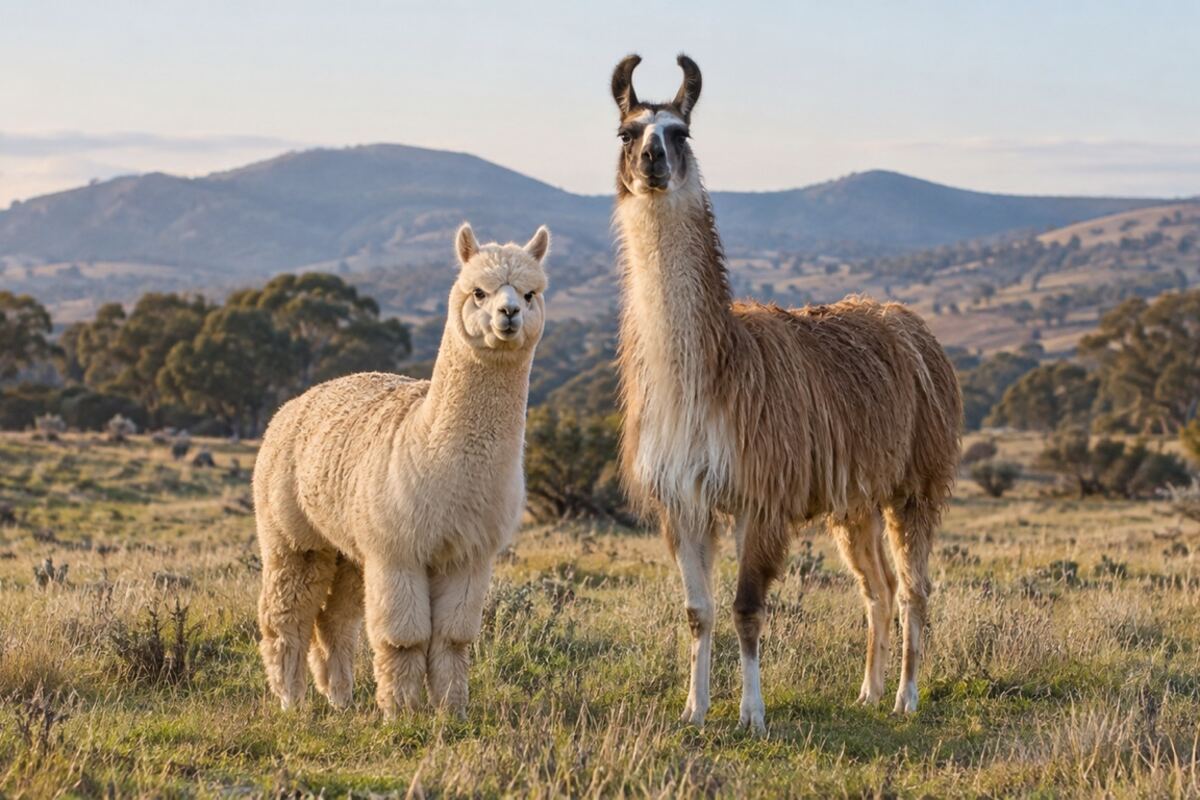
I took these photos at the Sydney Royal Easter Show a few years ago and often bring them up when customers ask us about the difference between an alpaca and a llama. This image alone shows just how different they are. To me, a llama’s longer face even bears a slight resemblance to a kangaroo!

Alpaca vs llama at a glance
|
Alpaca |
Llama |
|
Smaller and more compact |
Taller and more heavily built |
|
Short, spear-shaped ears |
Long, curved “banana-shaped” ears |
|
Shorter face with a soft, rounded appearance |
Longer face and more prominent muzzle |
|
Primarily bred for their luxurious fibre |
Traditionally bred as pack and guardian animals |
|
Usually has fine, dense fleece |
Often has a coarser outer coat, although quality varies |
Alpacas are smaller than llamas
Size is usually the easiest way to tell them apart. Llamas are much larger, with long legs, a longer neck and a sturdier frame. For centuries, their strength made them valuable pack animals in the Andes.
Alpacas are smaller and more compact. Rather than being bred to carry loads, they have been carefully bred for their beautiful fleece.
If you see the two standing together, the llama will generally be the much taller animal.
Look closely at their ears and faces
Their ears are another helpful clue. Alpacas have short, straight ears, while llamas have longer ears that curve inwards. These are often described as banana-shaped ears.
Alpacas generally have shorter faces and a soft, rounded appearance. Llamas tend to have longer faces with more prominent muzzles. Both are expressive animals, but their different head shapes give them quite distinct looks.
They were bred for different purposes
Although both animals have been important to Andean communities for thousands of years, they have traditionally had different roles.
Llamas were bred mainly for their size and strength. They were used to carry goods over difficult mountain terrain and are still commonly kept as pack or guardian animals.
Alpacas were bred primarily for fibre. Generations of selective breeding helped produce the soft, fine and dense fleece for which alpacas are known today.
What is the difference between alpaca and llama fibre?
Both alpacas and llamas produce usable fibre, although the quality can vary between individual animals. Alpacas have been selectively bred for their fine, soft fleece, while llama fleece often contains a greater proportion of coarse guard hairs. However, some llamas also produce beautifully fine, soft fibre.
Alpaca fibre is prized for its softness, warmth and light feel. It contains microscopic air pockets that help provide excellent insulation without requiring a heavy, bulky garment. It also has little or no lanolin compared with sheep’s wool, which can make it a comfortable choice for many people who find traditional wool irritating.
There are two types of alpaca:
- Huacaya alpacas grow dense, fluffy fleece with natural crimp. Their fibre is commonly spun into soft, lofty yarns.
- Suri alpacas grow long, silky locks with beautiful drape and lustre. Suri fibre creates smooth, elegant fabrics and yarns.

What is alpaca yarn like to knit or crochet with?
Alpaca yarn feels wonderfully soft in the hands and creates fabric with warmth, drape and a gentle halo. Depending on the way it is spun, it can be light and lofty or smooth and silky.
Because alpaca fibre has less natural elasticity than many sheep’s wools, it can behave a little differently while you work with it. A knitted or crocheted garment may have more drape and less “bounce,” so it is important to make a tension swatch and choose a pattern that suits the yarn.
Alpaca yarn is especially lovely for scarves, shawls, wraps, beanies, jumpers and other pieces worn close to the skin.
What does alpaca feel like to wear?
A well-made alpaca garment feels soft, warm and surprisingly lightweight. Rather than feeling heavy or bulky, alpaca provides excellent warmth for its weight and drapes beautifully around the body.
The comfort of any garment will depend on the fineness of the fibre, how the yarn has been spun and the way the piece has been made. Baby Alpaca and other fine alpaca grades are particularly sought after for scarves, knitwear and accessories because of their smooth, luxurious feel against the skin.
Do alpacas and llamas spit?
Yes, both can spit—but they do not usually wander around looking for people to target!
Spitting is most often a form of communication between animals, particularly around food, personal space or herd disagreements. A well-socialised alpaca may spit at a person if it feels threatened or very annoyed, but it is not their normal way of greeting visitors.

Which one are you looking at?
The quickest checklist is simple: if it is smaller, fluffy and has short, straight ears, it is probably an alpaca. If it is much taller, has a longer face and curved banana-shaped ears, it is probably a llama.
We may be a little biased, but alpacas are our speciality. Our family has been raising alpacas and sharing our love of this remarkable fibre since 1999.
Visit one of our Australian Alpaca Barn stores to feel the softness of alpaca for yourself, or explore our range of alpaca yarn, clothing, accessories and homewares online.
Discover What Makes Alpaca So Special
Now that you know the difference between an alpaca and a llama, why not discover a little more about the wonderful world of alpacas? From beautifully soft natural fibres to charming alpaca keepsakes, there are so many ways to enjoy these remarkable animals. Here are a few of our favourites.
- For those who simply love alpacas — explore our Alpaca-Shaped Toys and Keepsakes. From adorable fluffy alpacas to beautifully crafted needle-felted figures, these charming little companions make wonderful gifts for alpaca enthusiasts of all ages.
- For knitters and lovers of natural fibre — discover our Alpaca Yarn for Knitting and Crochet. Experience the beautiful softness, warmth and drape of alpaca fibre for yourself. Choose from luxurious baby alpaca, fine alpaca, Suri alpaca and carefully selected blends in a range of colours and weights.
- For a touch of everyday alpaca luxury — browse our Alpaca Scarves. Beautifully soft, naturally warm and wonderfully lightweight, our scarves showcase the qualities that make alpaca fibre so special. A lovely way to experience alpaca beyond the paddock.
Our family has been raising alpacas in the Hunter Valley since 1999, and sharing our love of these beautiful animals and their remarkable fibre is at the heart of Australian Alpaca Barn. Discover our alpaca yarn, scarves and alpaca-inspired gifts online.