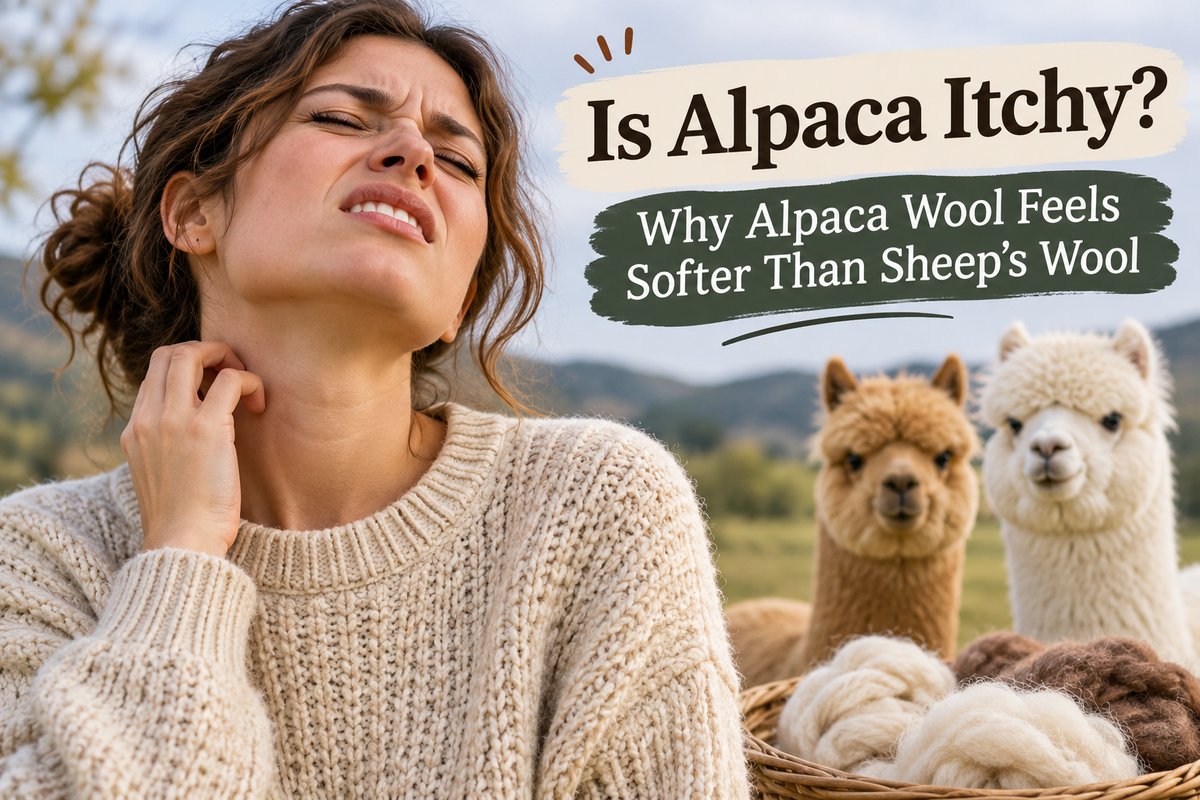
Is Alpaca Itchy? Why Alpaca Wool Feels Softer Than Sheep’s Wool
One of the questions we hear most often in our Australian Alpaca Barn stores is:
“Is alpaca itchy? I can't wear wool because it makes me itch.”

It's a question we completely understand.
Perhaps you've worn a wool scarf that felt scratchy around your neck, or pulled on a beautiful wool jumper only to find yourself itching a few minutes later. It's enough to make you think that wool — and anything similar — simply isn't for you.
But here's something that often surprises our customers: alpaca fibre is different from sheep's wool, and many people who find traditional wool itchy discover that alpaca feels beautifully soft and comfortable.
So why is that? Let's take a closer look at what actually causes that itchy feeling, why alpaca often feels gentler against your skin, and what to look for when choosing alpaca clothing.
Is Alpaca Wool Itchy?
For most people, fine alpaca fibre is soft, comfortable and less likely to feel prickly than coarser sheep's wool.
Alpaca fibre generally has a smoother surface, with flatter microscopic scales, and contains very little lanolin. When fine, well-selected fibres are used, the result can be a beautifully soft scarf, jumper or shawl that feels lovely against the skin.
However, not all alpaca is equally soft. Just like sheep's wool, alpaca comes in different grades, and coarser fibres can still feel itchy to some people.
The important thing to understand is that itchiness often comes down to the fineness and structure of the fibre, rather than whether it comes from a sheep or an alpaca.
Why Does Sheep's Wool Make You Itch?
When someone tells us they can't wear wool, they often assume they're allergic to it.
But in many cases, what they're experiencing isn't an allergy at all. It's a physical reaction to the fibres touching their skin.
1. Coarser fibres can prick your skin
Imagine a very fine, flexible strand of hair brushing against your skin. Now imagine a thicker, stiffer strand.
The finer strand bends more easily, while the thicker one is more likely to press into your skin.
The same principle applies to wool.
When a fabric contains enough coarse fibres, the ends protruding from the fabric can stimulate sensitive nerve endings in your skin, producing that familiar prickly or itchy feeling.
This is particularly noticeable around the neck, where scarves and high-neck jumpers sit directly against delicate skin.
2. Wool fibres have tiny surface scales
If you looked at a strand of sheep's wool under a powerful microscope, you'd see that its surface isn't completely smooth.
It's covered in tiny overlapping scales, a little like the tiles on a roof.
Alpaca has scales too, but they generally sit flatter and at a lower angle to the fibre surface.
This smoother structure is one reason alpaca can feel softer than sheep's wool of a similar thickness.
3. Your skin may simply be sensitive to certain fabrics
Some people have naturally sensitive skin and notice irritation from fabrics that others find perfectly comfortable.
Heat, perspiration, friction, dyes, fabric finishes and the construction of a garment can all influence how it feels.
So if you've experienced itchy wool clothing before, it doesn't necessarily mean that every natural animal fibre will cause the same reaction.
What Makes Alpaca Fibre Less Itchy Than Wool?
There are three important characteristics that help explain why alpaca often feels different.
1. Alpaca has a smoother fibre surface
One of the fascinating differences between alpaca and sheep's wool is something you can't see with the naked eye.
Both fibres are covered in microscopic scales, known as cuticle scales.
On alpaca fibre, these scales generally sit flatter against the surface.
On many types of sheep's wool, the scale edges are more prominent.
This contributes to alpaca's beautifully smooth feel, particularly in finer grades.
It's one of the reasons customers are often surprised when they first touch a soft alpaca scarf or baby alpaca jumper.

2. Fine alpaca fibres bend more easily against your skin
The thickness of an individual fibre is measured in microns. One micron is one-thousandth of a millimetre.
Generally speaking, the finer the fibre, the more easily it bends when it comes into contact with your skin.
Coarser fibres are stiffer, making them more likely to create a prickly sensation.
Fine alpaca, particularly baby alpaca, is prized for its softness. This makes it a wonderful choice for scarves, shawls and knitwear worn close to the skin.
But it's worth remembering that fine Merino wool can also be incredibly soft. The difference isn't simply alpaca versus sheep's wool — the quality and fineness of the fibre really matter.
3. Alpaca contains very little lanolin
Another difference between alpaca and sheep's wool is the amount of lanolin naturally present in the fleece.
Lanolin is a waxy substance found in sheep's wool. It helps protect the sheep's fleece from the elements.
Alpaca fleece naturally contains very little lanolin by comparison.
This can be relevant for people with a confirmed sensitivity to lanolin, although most lanolin is removed from sheep's wool during commercial processing.
Importantly, lanolin isn't usually the main reason a wool jumper feels prickly. Fibre thickness and fabric construction are often more significant.
Alpaca's low lanolin content is an interesting benefit, but it doesn't mean alpaca can never cause irritation or allergic reactions.
Alpaca vs Sheep's Wool: Which Is Better for Sensitive Skin?
Both alpaca and sheep's wool are beautiful natural fibres, and both can be soft and comfortable when carefully selected.
Here's how they compare.
| Feature | Alpaca Fibre | Sheep's Wool |
|---|---|---|
| Fibre surface | Generally flatter, smoother scales | Scale structure varies; some have more prominent edges |
| Lanolin | Naturally very low | Present in raw fleece; largely removed during processing |
| Softness | Fine and baby alpaca can be exceptionally soft | Fine Merino can also be exceptionally soft |
| Itchiness | Fine grades are often comfortable against the skin | Fine grades are also comfortable; coarse fibres may prickle |
| Suitable for sensitive skin? | Often a good option, depending on individual sensitivity | Fine Merino may also be suitable |
For someone who has always found traditional wool scarves scratchy, trying a beautifully soft alpaca scarf can be a lovely surprise.
Is Baby Alpaca Itchy?
Baby alpaca is one of our favourite fibres for garments that sit close to the skin.
Despite its name, baby alpaca doesn't necessarily come from a baby animal.
The term refers to a particularly fine grade of alpaca fibre, typically around 20–23 microns, depending on the grading system.
Because these fibres are so fine, they tend to bend more easily against your skin, creating a softer, smoother feel.
Baby alpaca is often used in luxurious scarves, jumpers, cardigans and shawls.
Of course, comfort is personal, and even baby alpaca isn't guaranteed to suit absolutely everyone.
If you're especially sensitive to wool, we often suggest starting with a fine baby alpaca piece and feeling the fabric against your neck or inner wrist before deciding.
Is Alpaca Hypoallergenic?
You may have heard alpaca described as hypoallergenic.
This is largely because alpaca fibre naturally contains very little lanolin compared with sheep's wool.
However, the word hypoallergenic doesn't mean that something is completely allergy-free.
A true allergy and the prickly sensation caused by coarse fibres are two different things.
Some people may also react to dyes, finishing treatments or other fibres blended into a garment.
If you have experienced a diagnosed allergy or significant skin reaction, it's worth seeking appropriate medical advice rather than assuming that any natural fibre will be suitable.
For many customers, however, the problem with wool has simply been that scratchy feeling — and fine alpaca can be a wonderfully comfortable alternative.
Can 100% Alpaca Still Be Itchy?
Yes, it can.
Although alpaca has a reputation for softness, its fibres come in different grades.
Some are exceptionally fine, while others are coarser and better suited to rugs, heavier textiles and products that aren't worn directly against sensitive skin.
Coarse guard hairs or fibres protruding from a finished garment can also influence how it feels.
Even a garment labelled 100% alpaca isn't automatically guaranteed to be softer than every wool garment.
If comfort is your main concern, pay attention to the feel of the actual garment, its fibre grade and any other materials used in its construction.
Which Alpaca Clothing Should You Choose if You Find Wool Itchy?
If you've avoided wool because of itching, there are some lovely ways to introduce alpaca into your wardrobe.
Alpaca scarves
A soft alpaca scarf is one of the easiest ways to experience the difference.
Because scarves sit directly against the neck, their softness is particularly important.
Our collection includes beautifully soft alpaca and baby alpaca scarves, as well as selected luxurious fibre blends.
Alpaca jumpers and cardigans
Fine alpaca knitwear can feel soft and comfortable while providing beautiful warmth without excessive weight.
If you find traditional wool jumpers scratchy, consider a fine baby alpaca jumper or a carefully selected alpaca and silk blend.
Discover Women's Alpaca Knitwear
Alpaca shawls and wraps
If you're particularly sensitive around the neck, a flowing alpaca shawl or wrap can be a lovely alternative to a tightly wrapped scarf.
You can drape it over your shoulders, layer it over a blouse or enjoy it as a lightweight extra layer.
How Can You Tell if an Alpaca Garment Will Feel Itchy?
Our favourite advice is simple: feel the garment against the part of your skin where you'll actually be wearing it.
Your hands may tell you that something is soft, but the skin around your neck can be much more sensitive.
When choosing a scarf, hold it gently against your neck. When trying a jumper, pay attention to the neckline and sleeves.
Look for fine grades of alpaca, check the fibre composition and remember that a blend can feel different from pure alpaca.
And if you're shopping online, you're always welcome to contact us for help choosing a beautifully soft piece.
Frequently Asked Questions About Alpaca and Itchiness
Does alpaca wool itch like sheep's wool?
Fine alpaca is generally less likely to feel prickly than coarser sheep's wool because of its smooth fibre surface and fineness. However, some alpaca can still feel itchy, particularly if the fibre is coarse or your skin is especially sensitive.
Can I wear alpaca if I'm allergic to wool?
It depends on what caused your previous reaction. Many people who describe themselves as allergic to wool are actually experiencing irritation from coarse fibres rather than a true allergy. If you have a confirmed allergy, seek medical advice before trying alpaca.
Is alpaca wool good for sensitive skin?
Fine alpaca can be a comfortable choice for people who find traditional wool scratchy. Baby alpaca is especially popular for next-to-skin garments, although individual sensitivities vary.
Does alpaca wool contain lanolin?
Alpaca fibre naturally contains very little lanolin compared with raw sheep's wool. However, the absence of significant lanolin doesn't guarantee that an alpaca garment will be non-irritating.
Is baby alpaca softer than regular alpaca?
Generally, yes. Baby alpaca refers to a finer grade of fibre, which usually feels softer against the skin. The finished garment's construction and fibre quality also make a difference.
Why does my alpaca jumper feel itchy?
It may contain coarser fibres, protruding guard hairs or other fibres in a blend. The knit structure, finishing treatments and your own skin sensitivity may also contribute.
Don't Give Up on Natural Fibres Just Because Wool Made You Itch
We meet so many customers who have spent years avoiding wool because of one uncomfortable scarf or jumper.
And we love introducing them to the beautiful softness of alpaca.
While no fibre is guaranteed to suit everyone, fine alpaca offers a wonderful combination of softness, natural warmth and comfort that makes it well worth exploring.
So the next time you find yourself thinking, “I can't wear wool because it itches”, remember that alpaca might surprise you.
Visit one of our Australian Alpaca Barn stores and feel the difference for yourself, or explore our beautiful collection of alpaca clothing and accessories online.
Explore Australian Alpaca Barn
Want to Know More About Alpaca?
Discover more about this remarkable natural fibre in our guides: